How Leep Utilities is using intelligent data analysis to identify potential water leaks earlier, helping developer clients protect their assets, reduce costs and make better use of a precious natural resource.
Water leaks aren’t always immediately obvious. A small but persistent leak can go undetected for days or even weeks, gradually increasing water costs, putting unnecessary pressure on resources and potentially causing damage to buildings, infrastructure and the surrounding environment.
For developers, landlords and those responsible for managing large residential and mixed-use developments, identifying these issues quickly can make a significant difference.
That’s why Leep Utilities has developed an additional layer of proactive monitoring, using intelligent analysis of existing water meter data to help identify potential leaks earlier and get the right people involved before a relatively minor issue becomes a much bigger problem.
Turning existing data into earlier warnings
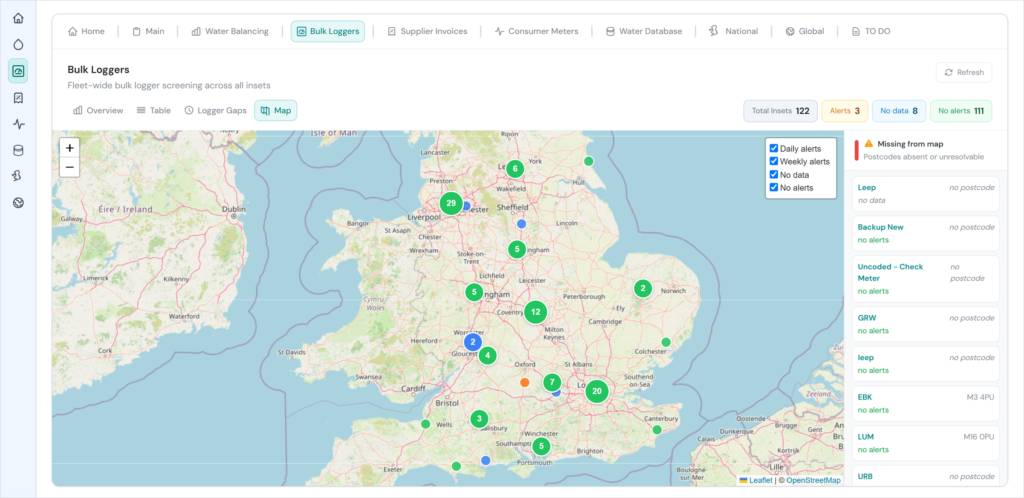
Across its water networks, Leep collects regular readings from our bulk water meters (upwards of 130 to date), providing a valuable picture of water consumption across developments.
Historically, this data has primarily supported the monitoring and management of water usage. However, Leep recognised an opportunity to make it work harder.
By developing its own bulk logger anomaly detection capability, Leep has created a way to analyse this existing data on a continuous basis, looking for patterns and change in consumption patterns that could indicate a leak.
The system uses a series of sophisticated mathematical calculations and detection algorithms to distinguish between different types of potential leakage and normal variations in water use. Importantly, it is designed to minimise false positives, helping operational teams focus their attention where it is most likely to be needed.
Rather than relying on a client to notice an unexplained increase in consumption, or waiting for a leak to become physically apparent, Leep can now identify potential issues proactively and alert the colleagues best placed to investigate.
From early warning to practical action
Technology is only part of the solution. What really matters is what happens next.
When the system identifies an anomaly, alerts are sent to Leep’s Water Operations and Revenue Assurance teams. These colleagues assess the information and, where appropriate, coordinate an investigation with the relevant client.
Leep’s investigators can then work alongside the client’s site or facilities management team to help pinpoint the source of the problem and arrange the appropriate remedial action.
This combination of data-led monitoring and hands-on operational support is important. An alert is only valuable if it leads to an effective response.
By bringing together the insight generated by the system with the experience of its operational teams, Leep is helping clients move away from a reactive approach to leak management towards earlier identification and intervention.
The benefits for our developer clients
The ability to identify potential leaks earlier brings several important benefits for those responsible for developments and the infrastructure within them.
1. Better control of water costs
Unidentified leaks can result in significant volumes of water being lost, with the associated costs continuing to accumulate until the problem is resolved. Earlier identification gives clients the opportunity to investigate and address issues sooner, helping to limit unnecessary consumption and avoid potentially substantial costs.
2. Protecting buildings and infrastructure
Water escaping from a leaking pipe or fitting can cause damage to building fabric, communal areas, plant rooms, landscaping and other infrastructure. The longer a leak remains undetected, the greater the potential for disruption and costly remedial work. Earlier intervention helps reduce that risk.
3. Less disruption for residents and site teams
Identifying a potential problem before it develops into a more significant incident can help avoid the disruption associated with emergency investigations, repairs and damage management. It also gives site teams more opportunity to plan and coordinate any necessary remedial work.
4. Better stewardship of water resources
Water is a precious natural resource, and reducing avoidable losses is an important part of using it responsibly. By identifying potential leaks earlier, Leep is helping to reduce unnecessary water consumption and supporting the wider effort to improve water efficiency across the built environment.
5. An additional layer of operational support
Perhaps most importantly, clients benefit from another set of eyes looking out for their developments. Leep isn’t simply collecting meter readings and responding when problems are reported. Its teams are actively analysing network data, looking for potential issues and taking the initiative to bring them to clients’ attention.
Continuous improvement, built around our clients
The development of this capability reflects Leep’s wider approach to network management: continually looking for ways to use information, expertise and technology to improve the service it provides.
Rather than introducing an off-the-shelf solution, Leep has developed an internal capability around the data available from its own networks and the practical experience of the colleagues responsible for operating them.
It has also been shaped by feedback from the people who use it, ensuring that the information generated is relevant, understandable and useful in supporting real-world investigations.
And the work doesn’t stop here. Leep continues to refine its approach, exploring further opportunities to extend proactive monitoring and make even better use of the data available across its networks.
More than managing a network
For Leep, looking after a water network means more than ensuring water gets where it needs to go. It means understanding how that network performs, recognising where problems might be developing and taking practical steps to protect the people, properties and places that depend on it.
Our proactive leak detection capability is another example of how we’re putting that philosophy into practice.
By combining intelligent data analysis with experienced operational teams, we’re helping developer clients identify potential problems sooner, protect their developments, manage costs and make better use of an increasingly valuable resource.
It’s another way Leep goes beyond simply connecting developments to essential utilities – providing the ongoing insight, expertise and support that helps those developments perform for the long term.